
I Never Used To Get Injured. What Changed?

I turned 50 during Melbourne's COVID lockdowns. There were no parties, no gym sessions and no trips to the track, but I'd managed to stay reasonably fit with local runs, walks (5km radius from home) and a makeshift home gym.
On the morning of my birthday, I headed out for an easy run and, less than three minutes later, badly strained my calf.
It would have been easy to dismiss it as an "old man injury". In fact, that's exactly what a lot of people did.
Looking back now, I'm not so sure.
It's a conversation I've had with countless masters athletes. They tell me that when they were younger they could train hard, race often and rarely think twice about how their body would pull up the next day. Now, in their 40s, 50s or 60s, it feels like every few months something goes wrong. A sore calf becomes a strain. A tight hamstring turns into weeks on the sidelines. An Achilles that always felt a little stiff suddenly refuses to settle down.
The obvious explanation is age, and age certainly plays a role.
What I don't think gets enough attention is that many injuries blamed on ageing result from a gradual change in the relationship between training and tissue capacity. Put simply, the body is no longer prepared for what you're asking it to do.
One of the things I've found most interesting as a coach is how differently athletes of the same age respond to training. I've worked with competitors in their 60s who string together years of consistent training with very few setbacks, while others in their 40s seem trapped in a cycle of recurring injuries.
In my experience, the difference is rarely explained by age alone. More often it's a combination of training load, recovery, strength, previous injuries, life stress, sleep and simple consistency. Just as importantly, it's whether the athlete continues exposing their body to the demands of their sport in ways it can adapt to.
This is where many well-intentioned athletes get caught out.
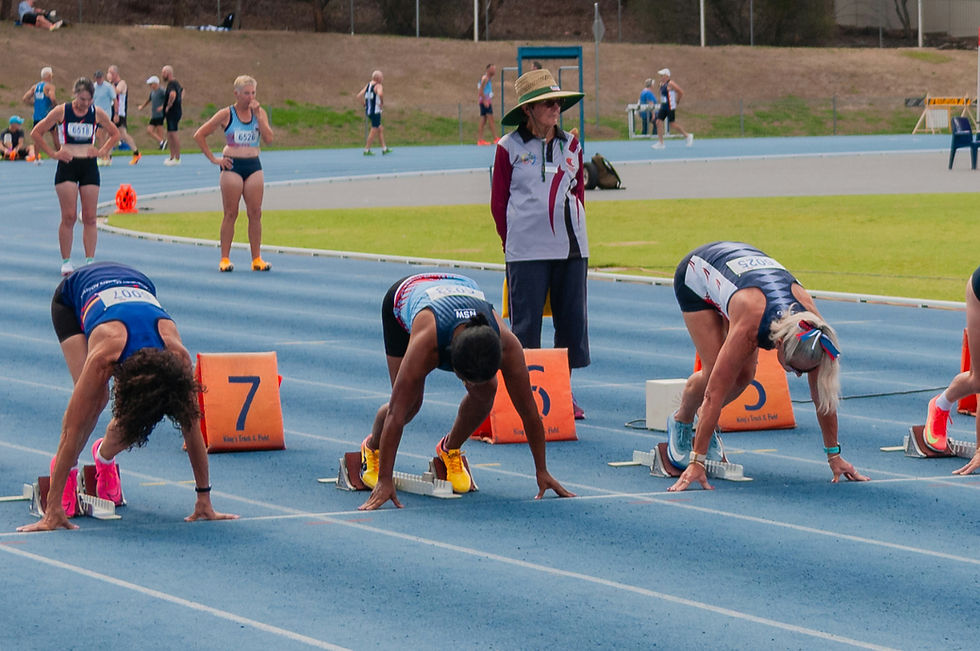
After an injury scare, they understandably become more cautious. They sprint less often. They avoid heavy lifting. They stop jumping. Sessions that once challenged them are replaced with work that feels safer and more comfortable.
For a short period, that's often entirely appropriate. The issue comes when those higher demands disappear for months or even years. The body adapts to what it experiences regularly. If it is rarely asked to move quickly, absorb force or produce force explosively, its ability to tolerate those demands gradually declines. Then competition arrives, or an enthusiastic training session, and those tissues are suddenly asked to do something they haven't practised for a long time.
To the athlete, it feels like the injury came out of nowhere.
Looking from the outside, I often see something different: a growing mismatch between capacity and demand. I've seen masters athletes remove sprinting, plyometrics and heavy lifting from their programs in an effort to avoid injury, only to find they become less tolerant of those demands when they eventually return to competition.
That's one reason I'm cautious when I hear blanket advice suggesting older athletes should simply avoid intensity.
Intensity isn't the enemy - poorly managed intensity is.
In fact, I've seen athletes become so concerned about avoiding injury that they gradually remove every demanding element from their training. Ironically, that cautious approach can leave them less prepared for the realities of competition.
Appropriately dosed sprinting, explosive movement and challenging strength work can all play a role in maintaining resilience. They remind muscles, tendons and the nervous system what they're expected to do. Remove those demands entirely and you may also remove part of the stimulus that helps preserve the capacity to tolerate them.
That doesn't mean every session needs to be maximal or that every masters athlete should train the same way. As athletes get older, the quality of hard work often becomes more important than the quantity. Recovery deserves greater respect, and the balance between stress and adaptation becomes increasingly individual. There's a significant difference between managing intensity intelligently and eliminating it altogether.
The masters athletes who stay healthy for years are not always the ones who train the least aggressively. More often, they're the ones who continue exposing themselves to meaningful demands in a planned and consistent way. They keep sprinting. They keep lifting. They keep asking their bodies to produce force and move with intent, while giving themselves enough opportunity to recover and adapt.
I've become increasingly convinced that resilience works much like strength or endurance.
You don't keep it by avoiding challenge. You keep it by exposing the body to enough challenge that it continues adapting without consistently overwhelming its ability to recover.
That's why I think the question, "Why do I keep getting injured now that I'm over 40?" can sometimes send athletes looking in the wrong direction.
A better question might be:
"Is my body prepared for the demands I'm placing on it?"
Looking back at my own calf strain, I don't think turning 50 magically caused the muscle to fail. A more likely explanation is that the demands I placed on it that morning exceeded what it was prepared for at that point in time.
That's a much more realistic way of looking at the problem. Because if injury is seen as an unavoidable consequence of ageing, there's very little an athlete can do other than accept it. However, because experience and data point to a mismatch between what the body is capable of and what it's being asked to do, the conversation changes. It becomes about preparation, progression and intelligent programming.
And that's exciting.
Because while ageing changes how we train, it doesn't mean we have to accept a future of constant setbacks. In my experience, masters athletes can remain remarkably resilient when they continue giving their bodies appropriate means to adapt.


Comments